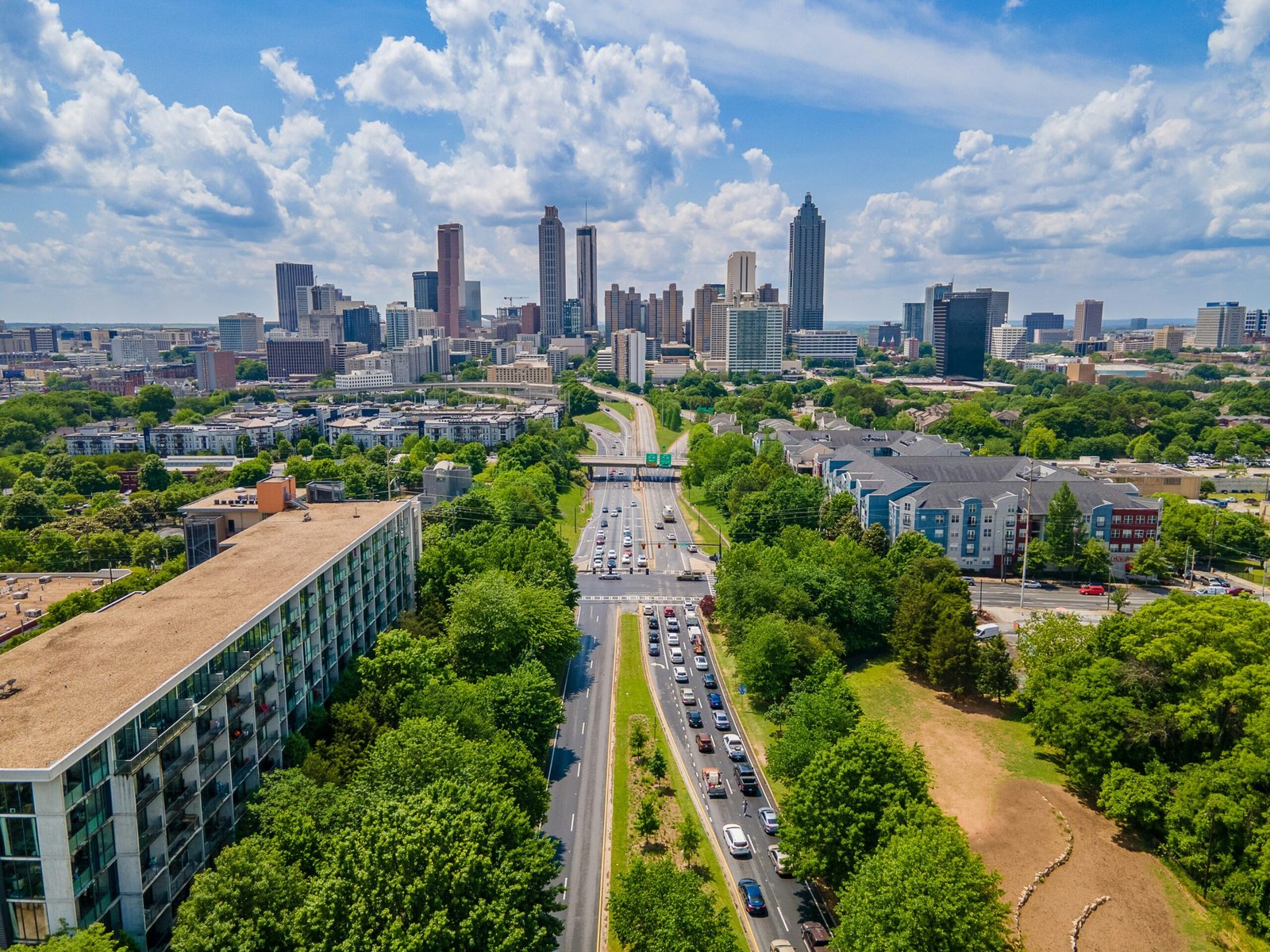
Your first neighborhood shapes how you’ll feel about Atlanta. Pick one that fits your routine and the city feels friendly and manageable. Pick one that doesn’t, and you’ll spend your first year in traffic wondering where everyone hangs out. This guide matches the best Atlanta neighborhoods for newcomers to the kind of life you want, with links to our full neighborhood guides, moving guides and safety pages so you can dig deeper before you sign a lease.
Start with three questions
- Where will you go most often? Your job, your partner’s job, school or the airport. Commute time matters more in Atlanta than almost anything else.
- Do you want to walk? If yes, focus on neighborhoods near MARTA rail or the BeltLine.
- Rent first or buy? Most newcomers rent for a year to learn the city. Our renting vs. buying guide explains the trade-offs.
If you want city living: Midtown
Midtown is the easiest landing spot for newcomers who want a true city lifestyle. It has high-rises and townhomes, three MARTA rail stations, Piedmont Park, the arts district and plenty of restaurants and bars. You can live here without a car. Read moving to Midtown and is Midtown safe?
If you want the BeltLine: Old Fourth Ward or Inman Park
Old Fourth Ward and Inman Park put the Eastside Trail outside your door, with Ponce City Market and Krog Street Market as neighborhood hangouts. They’re social, walkable and popular with young professionals. Our guide to living near the BeltLine compares every neighborhood on the trail.
If you have kids: Decatur
Decatur is a favorite for families moving to Atlanta. The City of Decatur has its own school system, a walkable downtown around Decatur Square, parks and a MARTA station with a direct train to Downtown and the airport. Read moving to Decatur and our Atlanta schools guide.
If you want polish and space: Buckhead
Buckhead mixes high-rise living along Peachtree Road with large homes on wooded streets. It’s home to major shopping, offices and restaurants, and the areas near the Buckhead and Lenox stations have rail access. Read moving to Buckhead.
If you want character: Virginia-Highland, Little Five Points or East Atlanta
Virginia-Highland is a classic intown neighborhood with bungalows, small shopping villages and a short walk to Piedmont Park. Little Five Points is Atlanta’s bohemian corner, with record shops and music venues. East Atlanta Village has a small, lively bar and music scene around The EARL. See our guides to Virginia-Highland, Little Five Points and East Atlanta Village.
If you want new construction and a creative scene: West Midtown
West Midtown has converted warehouses, new apartments, design shops and some of the city’s best restaurants and breweries, plus Shirley Clarke Franklin Park (Westside Park) nearby. It’s more car-dependent than Midtown. Read moving to West Midtown.
If you want history and a park: Grant Park
Grant Park has Victorian homes, a big historic park, Zoo Atlanta and quick access to the BeltLine and Downtown. It’s a strong choice for couples and families who want a neighborhood feel. Read moving to Grant Park.
If you work Downtown or at a university: Downtown
Downtown puts you close to major employers, Georgia State and the transit hub at Five Points. It’s improving fast, with new housing and restaurants. Read moving to Downtown.
If you want the suburbs, close in
Brookhaven, Chamblee and Sandy Springs offer suburban space with MARTA rail stations and growing walkable centers. Our intown vs. suburbs guide and ITP vs. OTP explainer help you decide.
Moving from a big city?
We’ve written specific guides for people coming from New York, Chicago and Los Angeles, covering what changes and which Atlanta neighborhoods feel most familiar.
Mistakes newcomers make
- Choosing by map distance. Five miles in Atlanta can take ten minutes or forty-five, depending on the road and the hour. Test the commute at rush hour before you sign.
- Ignoring the school zone. If kids are in the picture, the school attendance zone can matter as much as the neighborhood name. Confirm with the school district directly.
- Assuming every street is walkable. Even walkable neighborhoods have busy, car-oriented edges. Walk the actual route to the grocery store and the nearest station.
- Skipping the night visit. A block that’s quiet at noon may be lively at midnight, especially near the BeltLine, Edgewood Avenue or East Atlanta Village.
- Locking in too long. A shorter first lease gives you time to learn which part of the city really fits.
Your first-month checklist
- Set up utilities with our Atlanta utilities guide.
- Get your Georgia license and registration with our taxes, license and registration guide.
- Learn the commute with our MARTA and traffic guide.
- Check safety data for the exact blocks you’re considering in our safest neighborhoods guide.
- Compare costs with our cost of living by neighborhood guide.
Explore before you commit
Spend a weekend in each neighborhood on your list. Walk it on a Saturday and a weeknight, try the coffee shop, and time the drive to work at rush hour. Our guide to things to do in Atlanta and Atlanta events calendar are good excuses to visit, and every Atlanta neighborhood guide covers daily life in detail. Then read what to know before moving to Atlanta.