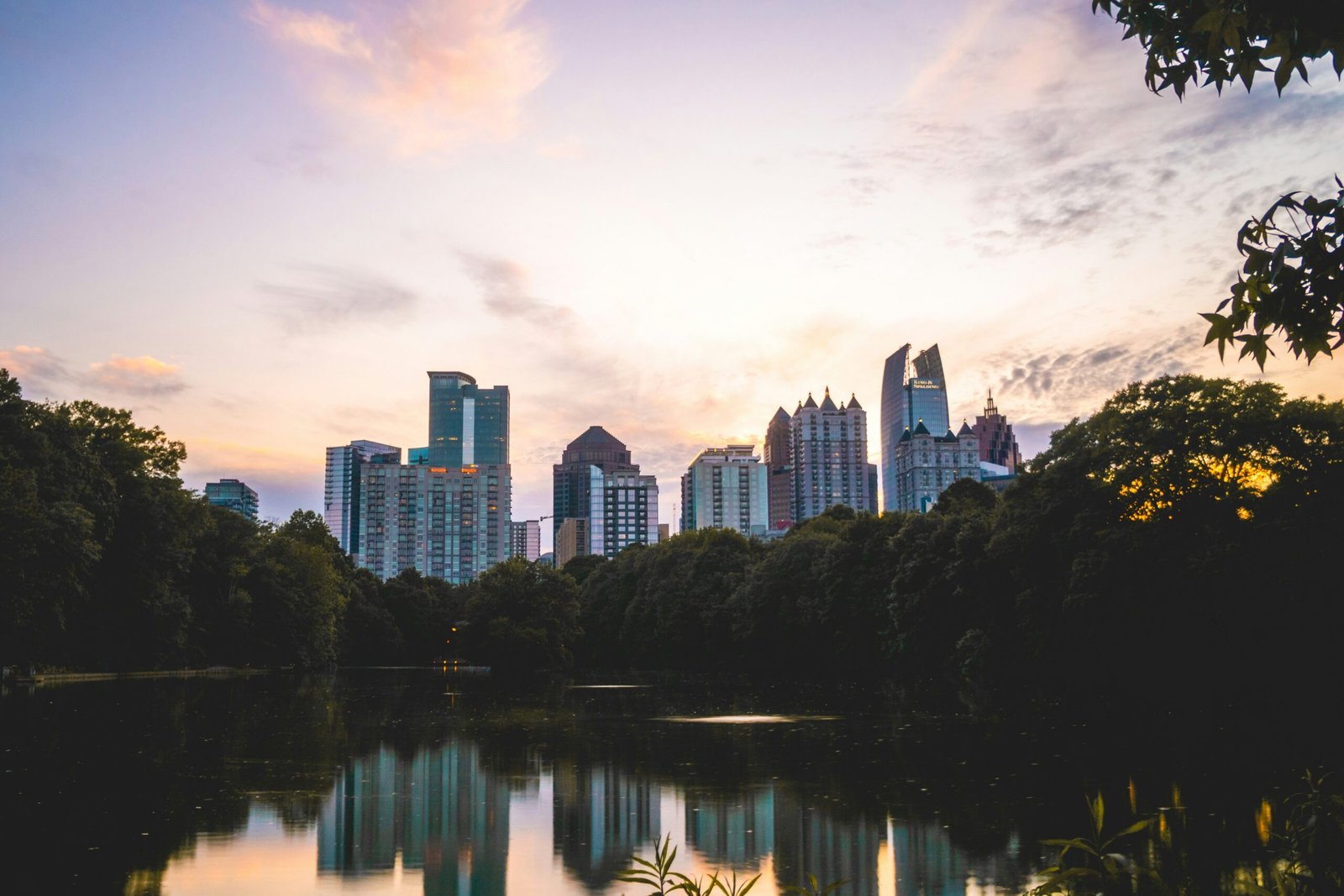
Atlanta has a reputation for tearing things down, and plenty of its history did disappear under freeways and towers. But its historic neighborhoods survived, and they tell the city’s story better than any museum: Victorian streetcar suburbs, a mill village, the street where Martin Luther King Jr. grew up and a garden suburb planned by the landscape architect behind New York’s Central Park. This guide covers Atlanta’s most historic neighborhoods, what to see in each and where to eat along the way.
Sweet Auburn
Auburn Avenue was the center of Black business, church and civic life in Atlanta for much of the 20th century, and it’s where Martin Luther King Jr. was born and raised. The Martin Luther King, Jr. National Historical Park, managed by the National Park Service, includes his birth home block and the historic Ebenezer Baptist Church, where he and his father preached. The King Center holds the tomb of Dr. and Mrs. King. Nearby, the APEX Museum focuses on African American history, and the Sweet Auburn Curb Market has served the city for generations. The area sits on the edge of Old Fourth Ward and Downtown.
Inman Park
Inman Park was Atlanta’s first planned suburb, developed in the 1880s by Joel Hurt and connected to Downtown by one of the city’s first electric streetcar lines. Its winding streets are lined with restored Victorian and Queen Anne homes, and Springvale Park is part of the original design. Every spring, the Inman Park Festival opens some of those homes for tours. Lunch at Krog Street Market, set in a converted 1920s warehouse, and read our Inman Park weekend guide.
Grant Park
Grant Park takes its name from the park that Lemuel P. Grant gave to the city in the 1880s, one of Atlanta’s oldest. The surrounding neighborhood has one of the city’s largest collections of Victorian homes, many of them carefully restored. Zoo Atlanta sits inside the park. See our Grant Park guide.
Cabbagetown and Oakland Cemetery
Cabbagetown grew up as a mill village around the Fulton Bag and Cotton Mill, and its small shotgun houses and cottages still line narrow streets. The old mill has been converted to lofts. On the neighborhood’s edge, Oakland Cemetery, founded in 1850, is the city’s oldest cemetery and a Victorian garden cemetery where many of the city’s best-known figures rest. The Krog Street Tunnel links Cabbagetown to Inman Park.
Druid Hills
Druid Hills is a garden suburb whose plan began with Frederick Law Olmsted, the landscape architect of New York’s Central Park. Its linear parks along Ponce de Leon Avenue, big trees and grand homes still reflect that design. Visit Callanwolde Fine Arts Center, a historic mansion built for a member of the Candler family, now an arts center, and the Fernbank Museum of Natural History.
West End
West End is one of Atlanta’s oldest neighborhoods, with Victorian homes, wide avenues and deep roots in the city’s African American history. The Wren’s Nest, the former home of writer Joel Chandler Harris, is one of the neighborhood’s landmarks. For lunch, Busy Bee Cafe has been a soul food institution for decades, and Portrait Coffee — West End sits in the historic Lottie Watkins Building.
Virginia-Highland
Virginia-Highland developed in the early 20th century as a streetcar suburb, and its Craftsman bungalows and small commercial villages still reflect that era. It’s a lovely neighborhood to walk, with John Howell Park in the middle and Piedmont Park a short walk away.
Midtown’s historic landmarks
Midtown is mostly towers today, but its landmarks are worth a walk. The Fox Theatre opened in 1929 and is one of the city’s most beloved buildings. The Margaret Mitchell House is where the author wrote Gone with the Wind. The Georgian Terrace hotel across Peachtree from the Fox is home to Livingston Restaurant & Bar. Nearby, Ansley Park is a historic residential neighborhood with winding, tree-lined streets.
Decatur
Decatur is older than Atlanta itself. Its historic courthouse on Decatur Square now houses the DeKalb History Center Museum, and the streets around it mix early homes with a lively downtown. Decatur Cemetery is one of the oldest in the region.
Historic places to eat
History tastes good in Atlanta. Mary Mac’s Tea Room in Midtown has served Southern classics for generations, The Varsity — Atlanta has been a Georgia Tech-area landmark for decades and Paschal’s carries a name tied to the civil rights era. Manuel’s Tavern in Poncey-Highland has long been a gathering place for politicians, journalists and neighbors.
Other historic districts worth knowing
Candler Park, Kirkwood, Ormewood Park and Home Park all have historic housing stock and neighborhood character. Each of our neighborhood guides covers what makes the area distinct.
A historic Atlanta walk
Start at the Martin Luther King, Jr. National Historical Park on Auburn Avenue. Walk east toward Oakland Cemetery and spend an hour on its paths, then continue through Cabbagetown and the Krog Street Tunnel into Inman Park’s Victorian streets. End with dinner on the BeltLine. Our free things to do in Atlanta guide has a similar day.
Living in a historic neighborhood
Historic districts come with character and, often, rules. Many intown neighborhoods have design review for exterior changes, and older homes can need more maintenance. Read our guide to apartments, townhomes and houses and renting vs. buying in Atlanta before you commit.
Keep exploring
For more ways to spend a day, start with our guide to things to do in Atlanta, browse the museums and attractions on the Atlanta City Living map or plan a rainy day with our indoor guide.